








Why Millions Still Rely on One of the World’s Most Misunderstood Foods
Most people never imagine that one of the world’s most important food sources could also carry hidden risks when handled incorrectly. Yet for hundreds of millions of people, this root vegetable remains part of everyday life, providing stability and nourishment in regions where other crops often fail. What makes the story so fascinating is not fear, but the balance between tradition, survival, and knowledge. Behind this ordinary ingredient lies a complex reality that has shaped communities for generations and continues to highlight how proper preparation and awareness can completely transform something misunderstood into a reliable source of nutrition.

1.
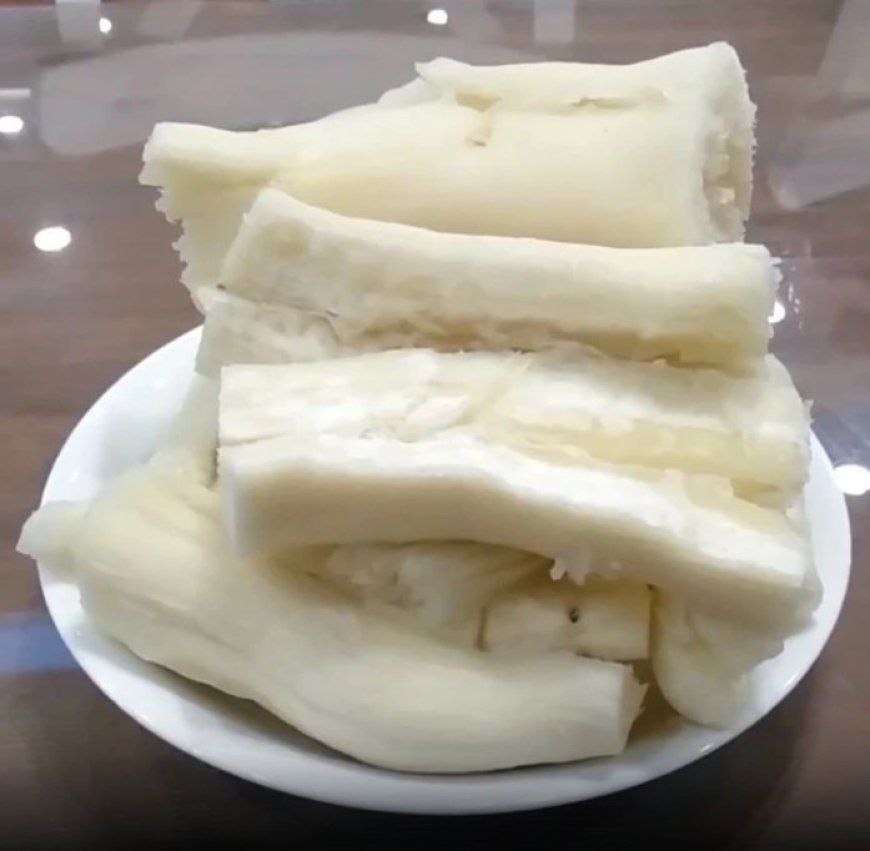
Every year, a common food consumed by millions around the world becomes the center of important health discussions due to the risks associated with improper preparation. Despite this, nearly 500 million people continue to rely on it as a major part of their daily diet because of its resilience, affordability, and nutritional value.
That food is cassava.
At first glance, cassava appears harmless. It is a root vegetable widely grown in parts of Africa, Asia, and South America, where it has supported communities for generations. In many regions, it serves as a dependable source of calories and plays a major role in local food systems. Its ability to grow in dry climates and poor soil makes it especially valuable in areas where other crops struggle to survive.
However, cassava also contains naturally occurring compounds called cyanogenic glucosides. These compounds act as the plant’s natural defense system. If cassava is not prepared properly before consumption, the compounds can release substances that may become harmful to humans.
The concern is not about cassava itself being unsafe by nature. When prepared correctly, cassava is widely recognized as safe and nutritious. The issue arises when important preparation steps are skipped, shortened, or misunderstood.
Traditional preparation methods are designed specifically to reduce these naturally occurring compounds. Depending on the region, cassava may be peeled, soaked, fermented, dried, and thoroughly cooked before being eaten. These methods have been passed down through generations and are essential for making the food safe.
In difficult circumstances, however, proper preparation is not always possible.
Periods of food shortages, economic hardship, or instability may force people to prepare cassava more quickly than recommended. In those situations, especially when bitter cassava varieties are involved, the risk of health complications increases.
Short-term exposure to improperly prepared cassava may lead to symptoms such as dizziness, stomach discomfort, nausea, or weakness. In more serious situations, severe health complications can occur.
Long-term exposure presents additional concerns.
One condition associated with chronic exposure is known as konzo, a neurological disorder that affects movement and muscle control, particularly in vulnerable populations where cassava is heavily relied upon and overall nutrition is limited.
Konzo primarily affects communities facing significant hardship, especially where dietary diversity is low and access to protein-rich foods is limited. The condition highlights how nutrition, poverty, and food preparation practices are deeply connected.
Despite these risks, cassava continues to remain one of the most important crops in the world.
The reason is simple.
For many communities, cassava is not merely a preference—it is a necessity.
Cassava survives drought conditions better than many staple crops. It grows in poor soil, requires relatively little maintenance, and provides a dependable food source during difficult seasons. In areas vulnerable to climate challenges and economic instability, it often becomes one of the few crops families can consistently depend on.
For millions of people, it represents security and survival.
The solution is therefore not to avoid cassava entirely, but to improve understanding of how it
should be prepared and consumed safely.
Education plays a critical role in reducing risks. Communities that understand the importance of soaking, drying, fermenting, and thoroughly cooking cassava are significantly less likely to experience health complications related to improper preparation.
Researchers and public health organizations have also worked to develop improved processing techniques that are both safer and easier to use. These methods aim to reduce preparation time while still ensuring harmful compounds are minimized effectively.
At the same time, broader improvements in nutrition and food access remain important. Tap the p.hoto to c.ontin.ue rea.ding the ar.ticle.