







What Psychologists Reveal When Someone Helps a Waiter Clear the Table
Small, everyday actions often reveal far more about a person’s character than grand gestures ever could. In social settings like restaurants, moments that seem ordinary—such as stacking plates, moving glasses aside, or helping tidy the table—can quietly reflect deeper psychological traits. These spontaneous behaviors usually happen without much thought, yet they can offer surprising insight into how someone relates to others.

1.
What Psychologists Reveal When Someone Helps a Waiter Clear the Table
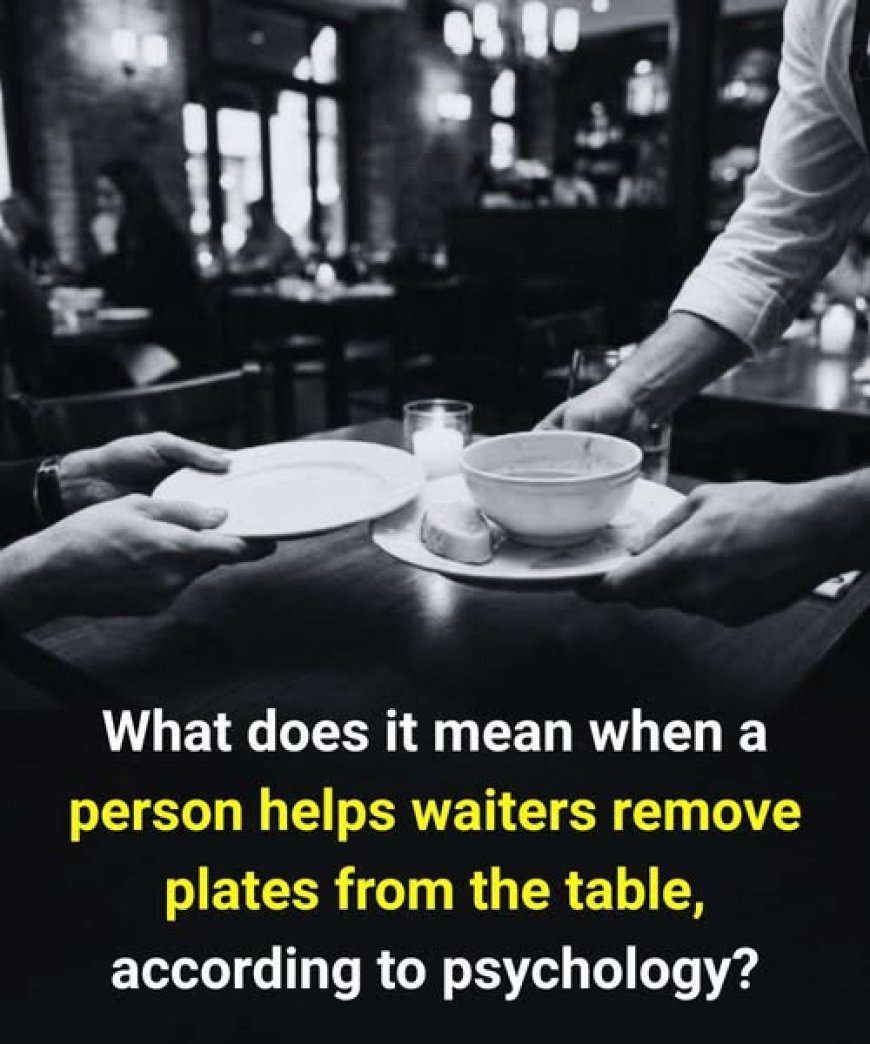
That quiet moment—reaching to stack your plate, gathering glasses, or gently tucking in your chair as a server approaches—feels like instinct. But psychologists see something deeper: a spontaneous signature of character. In a world of curated impressions, this unscripted gesture speaks volumes about who we are when no one is watching.
Five Quiet Truths Behind the Gesture
1. Empathy in Action
This isn’t just "being polite." It’s cognitive empathy—the ability to feel the server’s reality: the weight of a tray, the rush between tables, the quiet relief of a cleared space. As Daniel Goleman emphasizes, empathy is the bedrock of emotional intelligence. When someone helps without being asked, they’re not performing—they’re connecting.
2. Social Awareness, Not Social Climbing
They read the room with grace: noticing fatigue in a server’s posture, anticipating workflow, honoring roles without condescension. This situational awareness—rooted in respect, not obligation—fosters trust and cooperation far beyond the dinner table.
3. Humility as Quiet Confidence
Stacking a plate isn’t "lowering oneself." It’s affirming a deeper truth: No task diminishes dignity. Research on egalitarian values reveals that those who believe in inherent equality act without hierarchy. This isn’t self-effacement—it’s the quiet confidence that says, "We share this space."
4. Prosocial Nature, Not Performance
Psychologists classify this as prosocial behavior: voluntary acts that benefit others without expectation of reward. Those who consistently embody this often score higher in agreeableness, conscientiousness, and altruism. And as Martin Seligman’s work shows, such kindness nourishes the helper too—deepening purpose and well-being.
5. Values Woven Early
Often, this impulse echoes childhood: a parent who thanked servers by name, a family mantra of "leave places better than you found them," communities that honored shared
responsibility. These weren’t lessons drilled—they were values absorbed. What feels like instinct is often legacy.
What It Is Not
Psychologists are clear:
Not insecurity seeking approval
Not guilt over privilege
Not performative virtue
This gesture is typically automatic—done whether observed or not. Its power lies precisely in its lack of agenda.
The Deeper Resonance
In a culture that often equates status with distance, this small act is gentle rebellion. As psychiatrist Helen Riess reminds us: "Empathy is not a feeling—it is behavior."
That moment of stacking a plate or pushing in a chair whispers what grand gestures Tap the p.hoto to v.iew the full r.ecipe.