










Three vegetables linked to higher can.cer risk what to know before it’s too late
You may have come across headlines warning that certain everyday vegetables could be linked to serious health risks. At first glance, these claims can feel alarming—after all, vegetables are widely known as one of the healthiest parts of any diet. So what’s really going on?

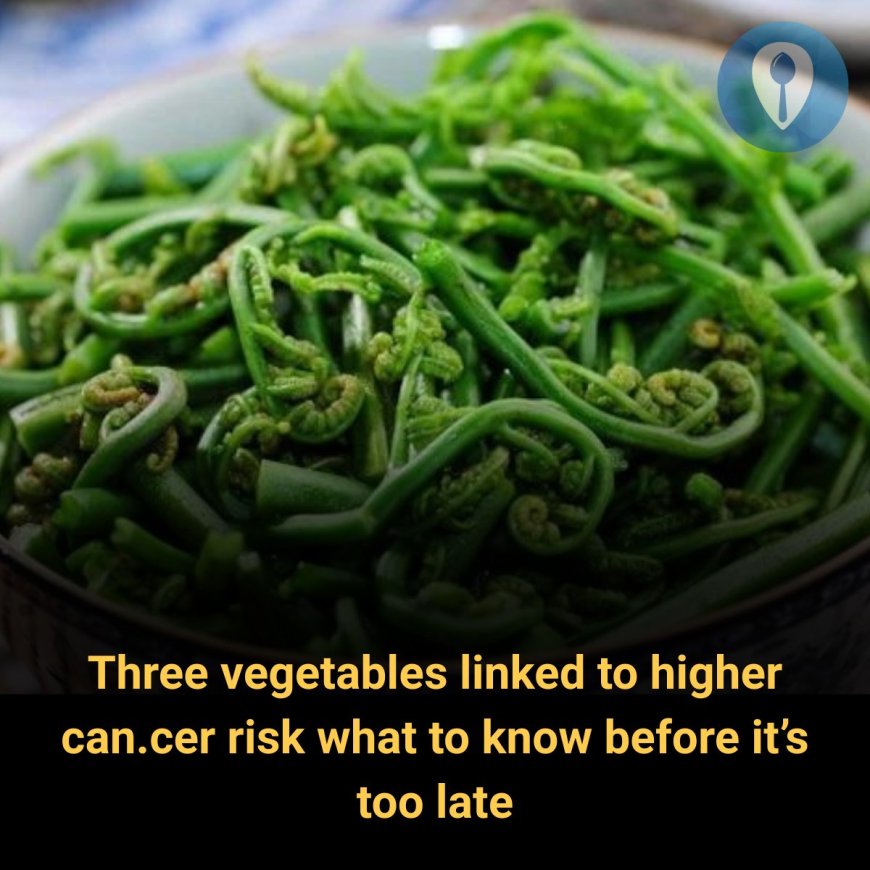
1.
Three vegetables linked to higher can.cer risk what to know before it’s too late
You may have seen alarming headlines like:
“These 3 Common Vegetables Could Increase Your Cancer Risk!”
But before you clear your crisper drawer—let’s separate sensationalism from science. The truth is far more nuanced, and in most cases, vegetables are powerfully protective against cancer, not a cause.
That said, there are a few specific contexts—related to how certain vegetables are prepared or consumed—that have raised questions in scientific research. Let’s look at the facts clearly, calmly, and without fear-mongering.
The Misleading Headline: What’s Really Going On?
There are no whole, fresh vegetables that are proven to cause cancer when eaten as part of a normal diet. However, three types of vegetables have been discussed in scientific literature under very specific (and often misunderstood) conditions:
1. Potatoes (When Fried or Burnt)
The concern: When potatoes are fried, roasted at very high heat, or burnt, they can form acrylamide—a chemical classified as "probably carcinogenic to humans" (IARC Group 2A).
Reality check:
Acrylamide forms in starchy foods cooked above 248°F (120°C)—not just potatoes, but also coffee, crackers, and toast.
Boiled or steamed potatoes pose no such risk.
Major health organizations (like the American Cancer Society) state that current evidence does not link dietary acrylamide to increased cancer risk in humans—though research continues.
What to do: Enjoy mashed, boiled, or baked potatoes. Limit french fries, chips, and heavily browned roasted potatoes.
2. Pickled Vegetables (Especially Traditional Asian-Style)
The concern: Some fermented or salt-preserved vegetables (like pickled mustard greens, cabbage, or radish common in Chinese, Korean, or Japanese cuisine) have been associated with a higher risk of stomach cancer in epidemiological studies.
Why?
High salt content can damage the stomach lining over time.
Certain traditional fermentation methods may produce N-nitroso compounds, which are carcinogenic.
Important nuance:
This risk is primarily seen in populations with very high, daily consumption (e.g., >50g/day for years) as a staple food—not occasional use.
Refrigerator pickles (vinegar-based, like dill pickles) do not carry this risk.
What to do: Enjoy fermented veggies like kimchi or sauerkraut in moderation—they offer probiotics! But avoid making heavily salted, traditionally preserved vegetables a daily staple.
3. Celery & Parsley (Due to Natural Compounds—Not a Real Risk)
The myth: These contain psoralens (natural plant compounds) that, in extremely high doses (like in lab settings or supplements), can be phototoxic or theoretically affect DNA.
Reality:
The amount in normal dietary intake is far too low to pose any risk.
In fact, celery and parsley are rich in antioxidants and anti-inflammatory compounds linked to lower cancer risk.
What to do: Keep eating them! No credible health agency warns against these vegetables.
The Bigger Picture: Vegetables Protect Against Cancer
According to the World Cancer Research Fund and American Institute for Cancer Research:
Diets rich in a variety of vegetables and fruits are consistently linked to a lower risk of multiple cancers, including mouth, throat, stomach, and colorectal cancers.
In fact, eating at least 5 servings (2.5 cups) of vegetables daily is one of the top evidence-based strategies for cancer prevention.
Smart Takeaways—Not Fear
Don’t fear vegetables—fear ultra-processed foods, smoking, alcohol,
and inactivity (real cancer risks).
Cook wisely: Steam, stir-fry, or bake instead of charring or deep-frying starchy veggies.
Tap the p.hoto to v.iew the full r.ecipe.