








Opened a Can of Spam and Found Clear Jelly Inside? Here’s Why It’s Normal and When to Be Concerned
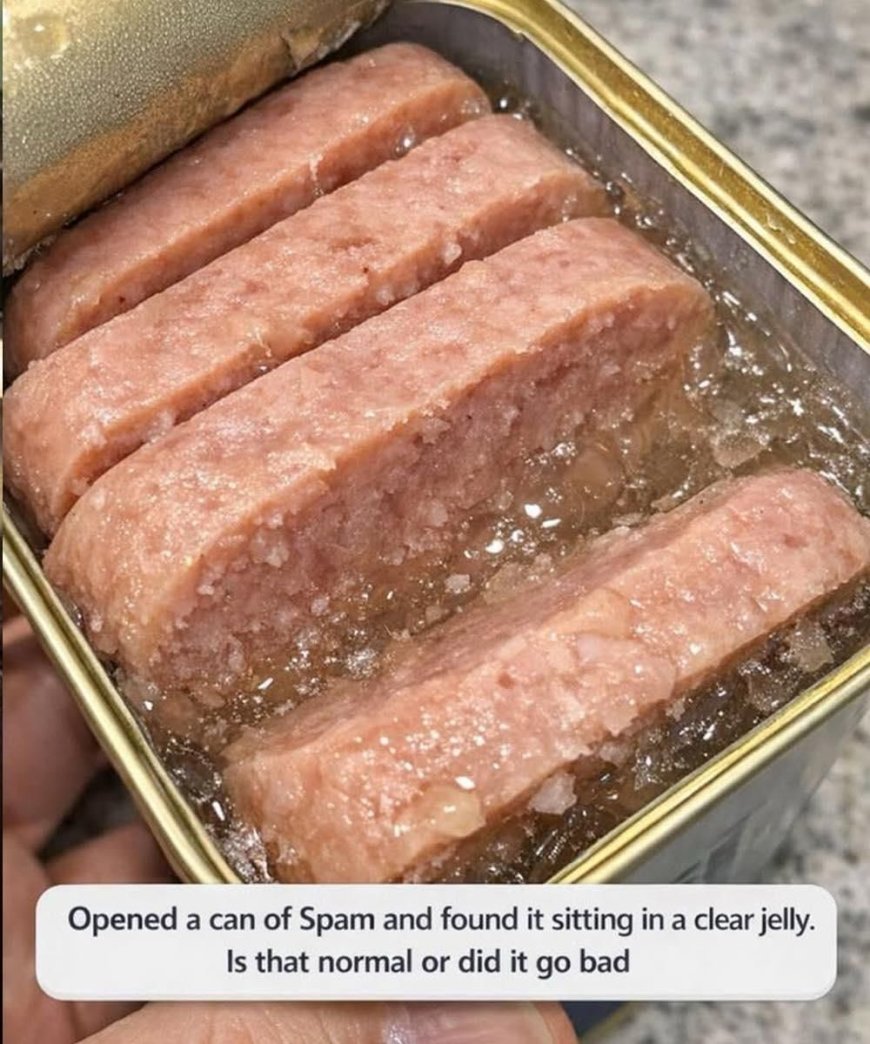
Opening a can of food and seeing something unexpected can be unsettling, especially when it comes to meat. If you’ve ever opened a can of Spam and noticed a clear, jelly-like substance surrounding the meat, it’s natural to pause and wonder whether something is wrong. For many people, this moment raises questions about freshness, safety, and quality. Is the product still good to eat, or should it be thrown away immediately? The good news is that what you’re seeing is usually completely normal—and understanding why it happens can help you feel confident about what’s on your plate.

1.
Opened a Can of Spam and Found Clear Jelly Inside? Here’s Why It’s Normal and When to Be Concerned
If you have ever opened a can of Spam and paused at the sight of a clear, jelly-like substance surrounding the meat, you are not alone. For many people, especially those trying Spam for the first time or returning to it after many years, that unexpected texture can raise an immediate red flag. It looks unusual. It feels unfamiliar. And it natural
ly leads to one important question. Is this normal, or has the food gone bad?
The short answer is reassuring. In most cases, the clear jelly inside a can of Spam is completely normal and safe. It is not a sign of spoilage, contamination, or poor quality. In fact, it is a natural result of how canned meats are prepared and preserved.
Still, understanding why that jelly forms and how to tell the difference between a normal product and one that should be discarded can offer real peace of mind. This is especially true for older adults who value food safety, careful preparation, and avoiding waste whenever possible.
Let’s take a closer look at what that jelly is, why it appears, and how to confidently decide whether your Spam is good to eat.
Why Spam Often Contains Clear Jelly
Spam has been a pantry staple in American households since the late 1930s. It earned its reputation through convenience, long shelf life, and versatility in the kitchen. From breakfast scrambles to sandwiches and skillet meals, it has remained a reliable option for generations.
The clear jelly you sometimes see when opening a can is a natural substance called gelatin. This gelatin comes from collagen, a protein found in the pork and ham used to make Spam. During the cooking process, the meat is heated thoroughly inside the sealed can. That heat causes the collagen to break down and turn into liquid gelatin.
Once the can cools after cooking, the liquid gelatin firms up. The result is the clear or slightly amber jelly that surrounds the meat. Nothing artificial is added to create it. It forms on its own as part of the process that makes Spam shelf-stable.
What the Jelly Does for the Meat
That gelatin serves an important purpose. It helps keep the meat moist during long-term storage. Without it, the meat could dry out or lose flavor over time. The jelly also contributes to Spam’s familiar texture and helps preserve its quality until the can is opened.
In many ways, it works like the natural gel you might notice when homemade broth cools in
the refrigerator. The difference is that Spam’s jelly is usually clearer and firmer because of the controlled cooking and sealing process.
Why It Looks Unusual to Some People
Many modern foods are heavily processed to look consistent and predictable. Clear jelly does not fit the image many people expect when they think of canned meat. If you grew up seeing Spam prepared hot and sliced, you may never have noticed the gelatin before.
Opening a cold can and seeing that glossy layer can be surprising, especially if no one ever explained what it was. That surprise alone can cause concern, even though the product is perfectly fine.
How to Tell Normal Jelly From Spoilage
While the presence of jelly itself is normal, it is still important to know how to recognize signs that Spam may have gone bad. Food safety always comes first.
Normal Spam jelly should be clear or slightly golden. It should not be cloudy, foamy, or discolored. The smell should be mild and slightly salty, similar to cooked pork.
If you notice any of the following, the can should be discarded:
• A strong sour or unpleasant odor
• Jelly that appears green, gray, or milky
• Meat that looks slimy or has dark or unusual patches
• A can that is swollen, leaking, badly dented, or rusted
These signs suggest that the seal may have been compromised or that bacterial activity occurred inside the can.
Using Your Senses as a Safety Guide
When in doubt, your senses are your best tools. Look carefully at the meat and the jelly. Tap the p.hoto to v.iew the full r.ecipe.