



I Adopted a Little Girl. Thirteen Years Later, One Phone Screen Brought Everything to a Stop
Sometimes the past doesn’t return with a knock on the door, but with a glowing screen in your hand. This is the story of a nurse who became a father in a hospital hallway, a little girl who grew up knowing she was chosen, and a truth that waited thirteen years to surface. What began as an act of compassion turns into a quiet test of trust, family, and what it really means to belong.

1.
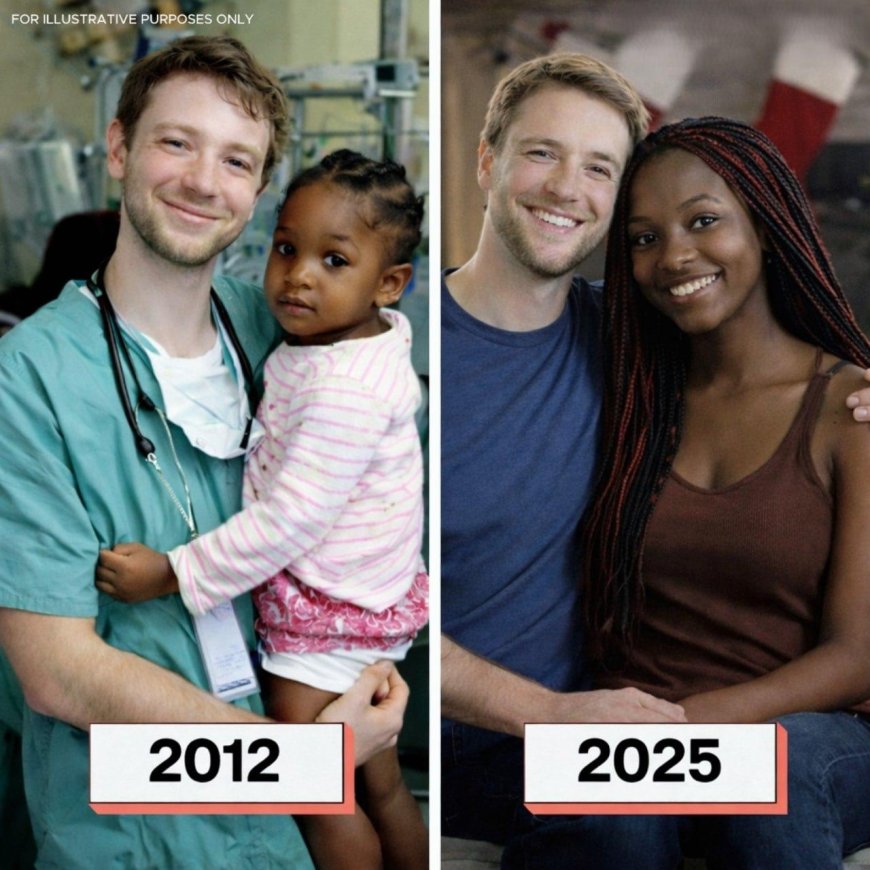
Thirteen years ago, I was still learning how to breathe inside a hospital. Not literally, of course, but it felt that way. Every shift required focus just to stay steady. Every decision felt heavier than it should have. I was new, newly certified, newly terrified of doing something wrong. I was a brand-new emergency room nurse, fresh out of training, wearing my scrubs like borrowed armor. They never quite felt like mine. The fabric was stiff, the pockets overstuffed with pens and folded notes. I checked charts twice, sometimes three times, not because I didn’t understand them, but because the idea of missing something made my stomach tighten. My hands shook when I signed my name. Not from weakness, but from the understanding that mistakes in this place could never be undone. I wanted to help people. I wanted to matter. I just didn’t yet trust myself to do it right. Hospitals at night have their own personality. The lights are dimmer. The hallways feel longer. Sounds carry differently. You hear things you don’t notice during the day, the hum of machines, the distant footsteps, the low murmur of voices behind curtains. That night, just before midnight, the call came in. Multi-vehicle accident. Two adults. One child. The words hit the room like a switch flipping. When the gurneys burst through the emergency doors, everything moved at once. Voices overlapped. Orders were shouted. Shoes squeaked against tile. Monitors chirped and beeped in uneven rhythms. The choreography of crisis unfolded the way it always does. Fast. Focused. Urgent. I moved where I was told. Hands steady despite my racing thoughts. Doing exactly what I had been trained to do. And then I saw her. She was standing in the middle of it all. Three years old. Tiny. Still. She wore a pink-striped shirt that looked far too thin for how cold the night must have been. Her shoes were mismatched, one sneaker and one soft slip-on, the kind toddlers kick off without realizing. Her eyes were wide, tracking the adults rushing past her. She wasn’t crying. That unsettled me more than anything else. She looked like she was watching a world she no longer belonged to. Her parents didn’t survive. We tried anyway. We always do. There is no such thing as giving up in an emergency room, not until the very last moment. Hands moved faster. Voices sharpened. Time stretched thin. And then the doctor stepped back. He didn’t need to say anything. The slight shake of his head said it all. The room didn’t go silent, not really. It went hollow. Hope leaves a space when it goes, and everyone in that room felt it. And there she was. Still standing. Still waiting. Alone. No one had told her yet. No one knew how. She was too small for words like that. Too young to understand permanence. Too young to know that the people she had walked in with would never walk out. I found myself kneeling in front of her before I consciously decided to move. The floor was cold through my scrubs. I held my arms out slowly, careful not to startle her. I didn’t say much. I didn’t try to explain. Some things don’t need explaining. She looked at me for a second longer, searching my face like she was checking for something she couldn’t name. Then she ran into me. She wrapped her arms around my neck with a force that surprised me, clinging like she had been waiting for permission to fall apart. She wouldn’t let go. So I stayed. I sat on the floor with her long after someone offered to take her to another room. I brought her apple juice in a small paper cup and didn’t mind when it spilled down my sleeve. I found a worn children’s book in the waiting area and read it out loud. Once. Then again. The pages were bent. The pictures faded. But she listened like it mattered. By the third reading, she reached up and tapped my name badge with one finger. She studied it carefully, lips pursed in concentration. “You’re the good one,” she said solemnly. Something inside me cracked open. Not loudly. Not all at once. Just enough to let something new in. Later, a caseworker pulled me aside. No next of kin. No immediate placement. Temporary arrangements would be made in the morning. She spoke gently, professionally, already planning steps ahead. Before I had time to think, before fear could catch up to instinct, I heard myself speak. “Can I take her home tonight?” I asked. “Just until you figure it out.” The caseworker looked me over carefully. I was young. Single. Working rotating shifts. My apartment was small. My life was already stretched thin. She didn’t say no. One night became a week. The girl slept on my couch at first, wrapped in a blanket that was too big for her. I barely slept at all. I checked on her constantly, half-expecting her to disappear if I looked away too long. A week became months. Months filled with scheduled home visits and parenting classes squeezed between overnight shifts. I watched instructional videos at two in the morning on how to braid hair without turning it into knots. I learned how to pack lunches. How to cut sandwiches into shapes that felt safe. How to calm nightmares that came without warning. I learned how to function on less sleep than I ever thought possible. She learned the layout of my apartment quickly. Which cabinet held snacks. Which drawer squeaked. Which nights I came home smelling like disinfectant and exhaustion. The first time she called me “Dad,” it slipped out by accident. We were standing in the freezer aisle at the grocery store. She was pointing excitedly at a box of popsicles. “Dad, can we get those?” I stared very hard at a bag of frozen peas so no one would notice my face. The word stayed with me long after we left the store. I adopted her. The paperwork was thick. The process slow. But the decision felt simple. I moved to a steadier schedule as soon as I could. Opened a college savings account the moment it became possible. I made sure she never questioned whether she was wanted. When she asked about her past, I told her the truth in pieces she could carry. I never lied. I just chose the gentlest edges. “You didn’t lose everything,” I always told her. “We found each other.” She grew into someone remarkable. Funny. Sharp. Stubborn in the way only confident kids are. She had my sarcasm and her biological mother’s eyes, deep and warm, the only thing I knew about that woman from a single photo buried in a hospital file. She loved to draw. She hated math. She pretended not to cry during animal rescue commercials. I didn’t date much. Life already felt full. Between night shifts, school projects, parent teacher meetings, and quiet evenings on the couch, there wasn’t space for much else. And honestly, I didn’t feel like anything was missing. That changed last year. I met Marisa at a friend’s dinner party, one I almost didn’t attend because I was exhausted. She was confident and polished, quick with a joke, comfortable in a room full of strangers. She liked that I packed leftovers for my daughter before overnight shifts. She noticed the details. Avery was cautious around her at first. Polite. Observant. In teenage language, that meant approval. After eight months, I bought a ring. I imagined a future that felt stable and balanced. Something built, not rushed. Then one night, Marisa came over acting wrong. She didn’t sit down. Didn’t take off her coat. She stood in the middle of the living room like she was bracing herself. Without a word, she shoved her phone toward me. “Your daughter is hiding something from you,” she said. “You need to see this.” My mouth went dry as the screen loaded. And the world, the carefully built life, paused on a glowing phone screen.Tap the p.hoto to v.iew the full r.ecipe.