







How To Thoroughly Clean Dull And Grimy Kitchen Cabinets
Kitchen cabinets quietly take on more wear and tear than almost any other surface in the home. Every meal you cook releases a fine mist of grease into the air. Steam rises, oil splatters, and tiny food particles settle onto cabinet doors and handles day after day. Over time, this invisible buildup turns into a sticky, dull film that attracts dust and makes even the cleanest kitchen feel tired and uninviting.

1.
What makes cabinet grime especially frustrating is that it often goes unnoticed until it becomes severe. Because the buildup develops gradually, many people don’t realize how dirty their cabinets truly are until they run a hand across the surface and feel the tackiness. The thought of scrubbing every cabinet door, corner, and handle can feel overwhelming, which is why this simple, natural method is such a relief.
A Simple, Two-Ingredient Solution
Instead of reaching for harsh chemical cleaners, this approach relies on two common household ingredients: baking soda and coconut oil. According to Jillee from One Good Thing By Jillee, this combination is surprisingly effective at breaking down grease while being gentle on most cabinet finishes. Baking soda provides a mild abrasive quality that lifts away stuck-on grime, while coconut oil dissolves grease and restores moisture to dry, dull surfaces.
To prepare the mixture, combine one part coconut oil with two parts baking soda in a small bowl. Stir until you have a thick, spreadable paste. The texture should be gritty but smooth enough to glide across the cabinet surface without dripping.
How to Apply the Cleaner Properly
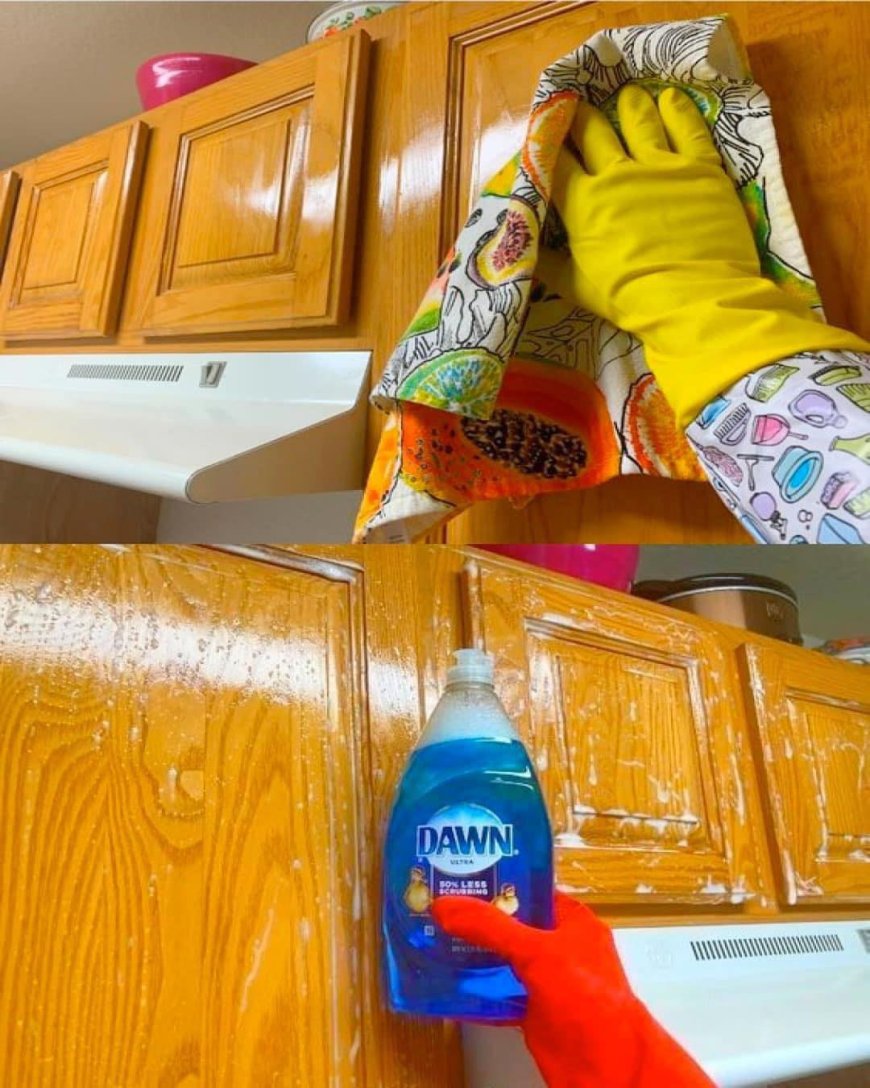
Using either your fingers or a soft cloth, apply the paste directly to the cabinet doors, frames, and handles. Work in small sections so you can focus on evenly distributing the mixture. For areas that collect the most buildup, such as around handles, corners, and decorative trim, an old toothbrush works perfectly. The bristles allow you to gently scrub into grooves and crevices where grease loves to hide.
As you
work the mixture into the surface, you may notice the paste changing color as it lifts away dirt and residue. This is a good sign that the cleaner is doing its job. Take your time, especially on cabinets near the stove, which tend to collect the heaviest buildup.
Removing the Residue and Revealing the Results
Once you’ve covered all the cabinets, take a slightly damp cloth and wipe away the excess paste. You don’t need to soak the cloth; a light amount of moisture is enough to remove the mixture without spreading residue. As you wipe, you’ll likely be surprised by how much grime comes off, even if the cabinets didn’t look especially dirty beforehand.
After wiping, go over the surfaces with a dry cloth to buff them gently. This final step helps Tap the p.hoto to v.iew the full r.ecipe.