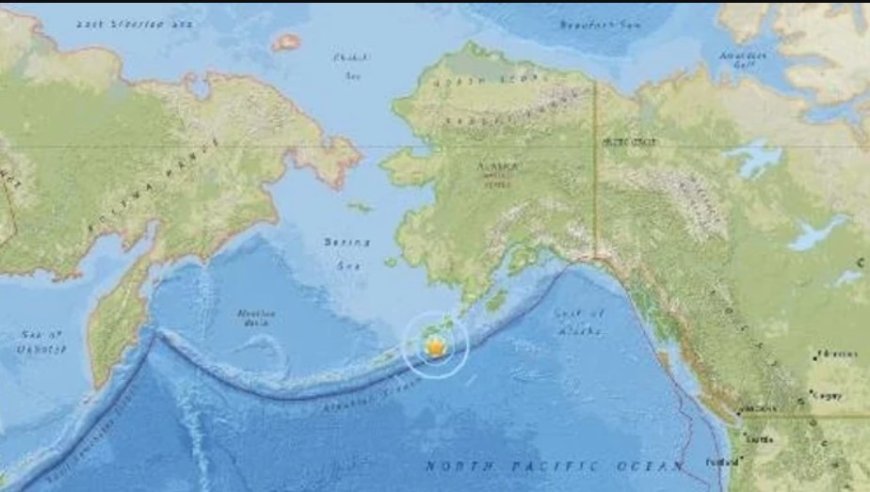
A strong earthquake was recorded in the Alaskan Peninsula region, prompting immediate monitoring and precautionary measures across nearby coastal areas and parts of the Pacific. According to early reports, the earthquake reached a magnitude of 8.2 and occurred east-southeast of Perryville, Alaska, at a depth of approximately 35 kilometers beneath the surface, a factor that may have reduced some of the direct impact at ground level while still representing a significant seismic event. Following the earthquake, automated warning systems were activated in several coastal communities, and local authorities advised residents in certain areas to remain alert and follow official safety guidance. In locations such as Kodiak, precautionary alerts encouraged movement to safer ground while assessments were being carried out, reflecting standard procedures designed to minimize risk in the event of potential ocean activity. The National Tsunami Warning Center issued alerts for parts of southern Alaska, particularly coastal regions between Hinchinbrook Entrance and Unimak Pass, emphasizing that such measures are taken as a precaution when seismic events of this magnitude occur. Initial monitoring also extended to other Pacific regions, including Hawaii and Guam, where temporary alerts were issued and later lifted after further analysis indicated no significant threat. At the state level, officials confirmed that emergency response systems were activated promptly, allowing coordination between local, state, and federal agencies to ensure readiness and effective communication. International monitoring organizations, including those specializing in ocean and seismic analysis, also reviewed incoming data to evaluate any broader regional effects, highlighting the collaborative nature of global monitoring efforts in such situations. In the hours following the earthquake, additional seismic activity was recorded in the form of aftershocks, including several events of notable magnitude, which are common after large earthquakes and are closely tracked to assess ongoing stability in the region. Authorities have noted that aftershocks, while expected, require continued awareness, as they can influence local conditions and require further evaluation of infrastructure and terrain. Early assessments indicated no immediate confirmation of widespread damage or casualties, although officials emphasized that inspections and evaluations were still ongoing and that information may be updated as more data becomes available. In events of this scale, infrastructure checks, coastal monitoring, and continuous data analysis are essential to fully understand the impact and ensure public safety. The situation has also highlighted the importance of preparedness, particularly in regions located along tectonically active zones such as the Pacific “Ring of Fire,” where Tap the p.hoto to c.ontin.ue rea.ding the ar.ticle.